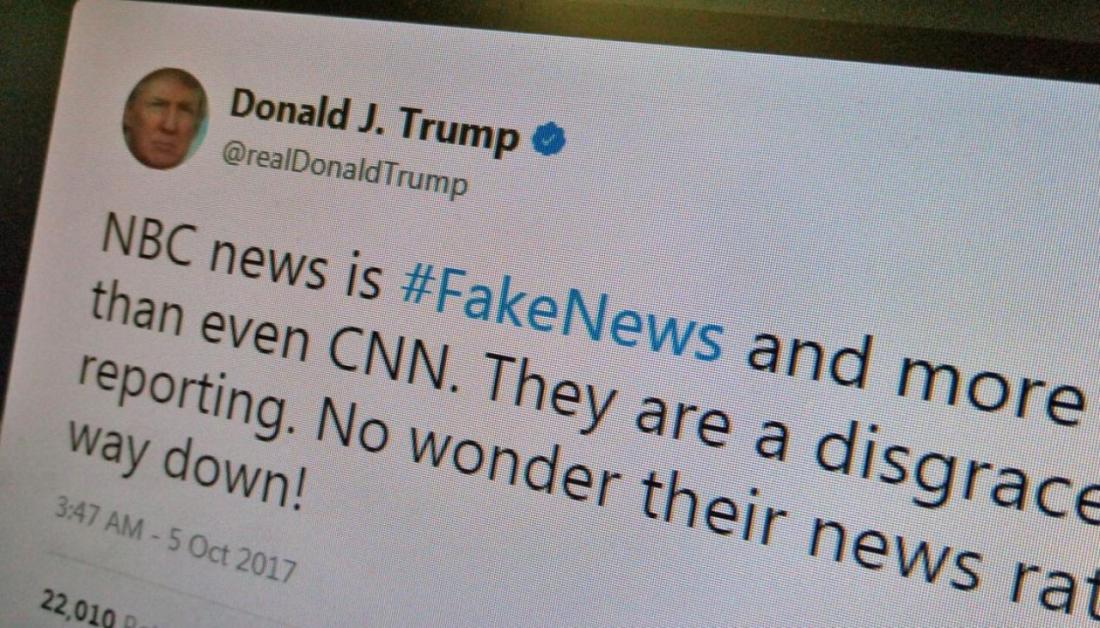
I believe if there’s one thing that voters in democratic states worldwide, and especially in the United States heading into 2020 should concern themselves with, it’s the danger of what I’ll refer to here as “fake news.” The Guardian published an article by Dan Tynan during the 2016 Election that outlines the story of how Social media platforms are creating lucrative advertising incentives in the US and abroad for cheap clickbait political news accounts. The reporting states,
“The town of Veles, Macedonia (population 44,000), is the unlikely home for dozens of avowedly pro-Trump political news sites, featuring headlines like Hillary’s Illegal Email Just Killed Its First American Spy and This is How Liberals Destroyed America, This Is Why We Need Trump in the White House.
The Guardian has identified more than 150 domains registered to people claiming addresses in Veles, though not all of those are associated with active websites.
Some claim to garner millions of page views per month. Most others are relatively obscure. All of them exist primarily for one reason – to cash in on the seemingly endless appetite for news about Donald Trump. And they’re getting a big boost from Facebook.”
A democracy requires the possibility of consensus, people must be able to look at the same facts and reach some common understanding about the nature of any given problem if there’s to be any hope of taking steps toward solving it. Allowing mere “clickability” to determine the profitability of content poses an obvious danger to the maintenance of constructive political discourse because, as any mildly self aware person will tell you, our reasons for any particular small decision like a click, or the fact that our eyes naturally dart across the screen to view one thing as opposed to another are pretty rarely within our control, and almost never within our full view as individuals. The human mind has evolved, it seems, not for maximization of certain scholarly intuitions or mental habits for vetting information and reasoning through arguments that are required to form a nuanced view of any topic, but instead, left untended the human mind prioritizes much more primal motivations.
Although these Social Media platforms to which Americans have so readily assigned a central seat in the space of our daily waking attention have created an effective infrastructure for delivering useful information to vast numbers of people very quickly, they do not come without their risks. These risks have become increasingly salient since 2016, the year the Russian government launched an internet hacking and disinformation campaign to assist a reality TV celebrity and failed real estate tycoon into winning the election for President of the United States of America, hacked into two voter databases in the South, and succeeded.
I want people to start reflecting accurately on what these technologies are, They are a human-machine interface, capable of hacking our attention and subconscious in various ways to accomplish any number of ends, depending on how they are used. Humans have evolutionary programming just like all creatures, and thus have certain predictable reactions which are quite easily exploited by clever engineers with questionable incentives. The fact is, that by exposing ourselves to these platforms, we are allowing a whole range of others, many of whom are far more aware of these risks than we are, and who may or may not share even our most basic political interests such as… Oh, I don’t know, Citizenship in the United States to have the opportunity to compete for direct, mercenary access to our stream of consciousness.
The threat doesn’t only lie with Russia, or Macedonians. In many cases this is something that we as Americans are doing to each other, Tynan states,
“Even smaller sites are making bank on the surge of interest in the Republican nominee.(Trump) Liberty Writers News, a two-person site operating out of a house in the San Francisco Bay Area, generates income of between $10,000 and $40,000 a month from banks of ads that run along the side and bottom of every story.”
We have to rise to a higher standard than these cheap excuses for political media. We need a generation to rise up and make way for measured, intentional political commentary in this space of cyber communication. And no, that doesn’t just mean clicking the share button, and it doesn’t mean sharing Trump memes. We need real Americans with real opinions and experience to take personal responsibility for the things that they expose others to through their social media account shares. There would be no false incentive if it were not for our propensity to believe and spread these falsehoods. Congress has been asleep for three decades on this front, and at least in the very near term cannot be counted on to make meaningful legislation that can protect our elections and so it is up to us as citizens to take back our dialogue.
 My American Life